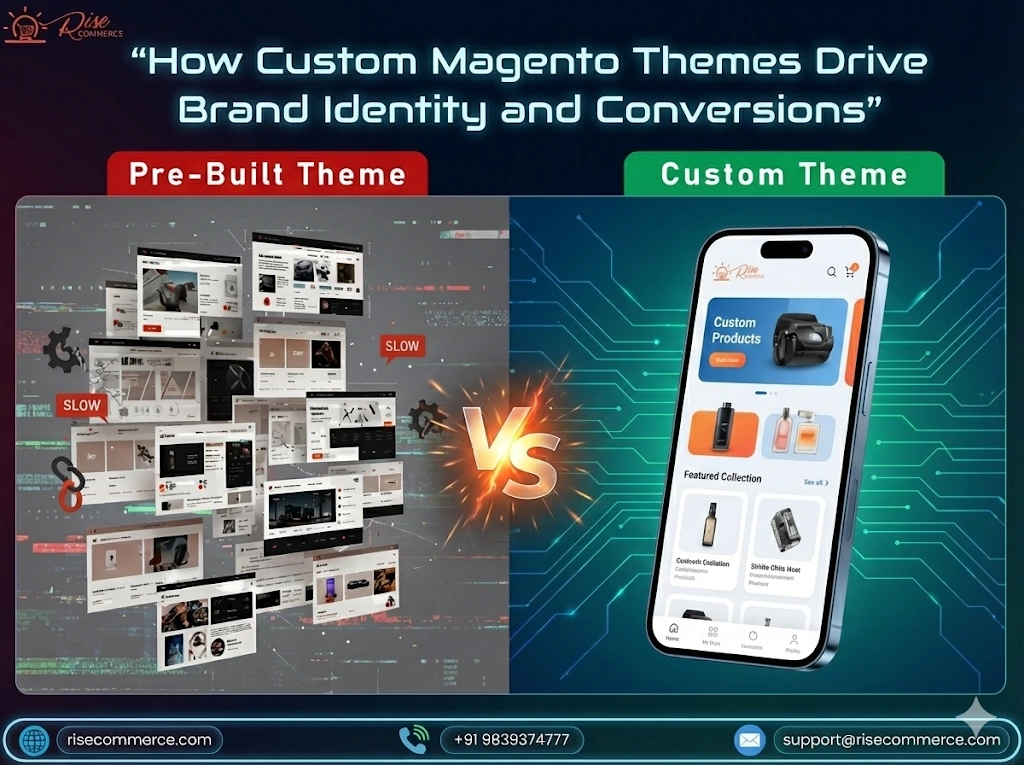
How Custom Magento Themes Drive Brand Identity and Conversions?
An individual design has an influence on the appearance of your shop on the Web. Everything is just right because it is exactly the right fit for your brand. This leads to an easier time browsing for customers. On platforms like Magento, themes are made unique and work behind the scenes. They make you stand out among the competitors and increase revenue simultaneously.
Store proprietors opt to use custom designs, rather than template designs. Their goal? A website that actually feels like their brand. No matter if it’s fragrances, furniture, or car gear, distinct visuals connect more deeply with shoppers. Here’s the real issue: how well do custom setups stack up against ready-made options? Bottom line – they win. These builds deliver smoother browsing, quicker load times, along with stronger presence on search platforms.
Why Custom Theme Development Matters for Brands?
You have got to stand out if you want to keep up. Most shops end up looking nearly identical thanks to one-size-fits-all templates. Building a custom design fixes that problem right away. Your store ends up reflecting your brand’s true personality instead of blending in.
Looking good matters, sure – but there’s more to custom themes than that. Yep, they cost time and cash. Still, think of ‘em as a smart move for your biz. They help folks feel cool about buying from you. Plus, each piece works toward what you’re trying to hit. No fluff, no waste – just stuff that pulls its weight.
This step matters a lot if you run a Magento shop. Though packed with features, the system can feel tricky. With a tailored design, you actually use what it offers. Navigation becomes smooth and clear for visitors. That means more sales over time – along with repeat buyers.
Key Benefits of Custom Magento Theme Development
- Boost Brand Identity and Visual Appeal
- Ordinary topics get lost. On the flip side, tailored ones stick in minds.
- Your shades, typefaces, or setup show what your brand is about.
- This creates a closer bond with your audience – using trust instead of tricks, it grows naturally through real moments.
- Improve User Experience and Conversions
- Easy-to-use menus let shoppers spot items quickly – so they don’t wander around confused.
- A clear setup cuts confusion while lowering exit chances.
- A clean layout leads people quickly to payment, so more complete purchases.
- Enhance Performance and Speed for Mobile Shoppers
- Clean code runs quickly – so pages load faster.
- Faster load times hold attention better – particularly on phones.
- Faster websites tend to show up higher in search results.
- Gain an SEO Advantage with Optimized Code
- From day one, creators set up a site layout that works well with search engines.
- Clean code helps search engines find your stuff faster – so they can sort it quicker.
- This base makes your shop show up better in search results.
- Ensure Scalability and Future Upgrades
- Your theme might expand as your company does.
- Just plug in extras – say, unique checkout options or rewards setups – with no hassle.
- It works with tools like PWA to make websites feel more like apps.
- With custom Magento designs, updating later takes less time – about 40% faster. Because they’re built smart, expanding your store down the road works smoothly.
Step-by-Step Magento Custom Theme Development Process
A solid plan leads to better outcomes. When building a Magento theme from scratch, pros move step by step – using smart methods that fit each stage.
Phase 1: Theme Declaration and Registration
- Developer teams chat about your business, what you want to achieve, or who you are trying to reach.
- They map out how the pages fit together while guiding how people move through them.
- This stage lays out the path for the whole effort, using a rough outline to guide each step forward.
Phase 2: Custom Styling and Layout Adjustments
- Artists sketch out main screens by hand or on screen.
- You check it out, then share what you think about how it looks and feels.
- The main goal? Looks matter – but so does how well it works.
Phase 3: Adding Dynamic Functionalities with Knockout.js and APIs
- Developers pick a spot for the theme – say, app/design/frontend/Vendor/yourtheme – to get things running.
- They set the theme inside theme.xml, then hook it up using registration.php.
- Core changes take place right in this spot
- Styles get added through CSS.
- Designs get created or tweaked using different setups. While some adjust existing frames, others build new ones from scratch.
- Extra features get built using JavaScript – Knockout.js works here.
- Important updates, such as changes to checkout or linking systems, are added using tools that connect parts.
Phase 4: Testing, Optimization, and Launch
- The idea gets put through tough checks.
- Groups test how well things work across gadgets.
- They keep things fast, working well, while fitting all browsers.
- Once it’s approved, your live store gets the new look.
Phase 5: Maintenance & Support
- Specialists keep helping along the way – guiding whenever needed.
- They take care of updates, security fixes, or moving things around.
- This keeps your shop running smoothly – without hiccups or delays.
- This whole thing usually lasts 4 to 12 weeks – how long depends on how tricky your shop is set up.
Why Brands Should Avoid Pre‑Made Themes?
Bloat Slows Performance:
- Pre-made themes overload your site with unnecessary sliders, popups, and plugins, making pages load up to 5x slower.
Wasted Code Hurts Sales:
- Even a 0.5-second delay can cut conversions by 7%, as proven by Google’s data on slow pages.
No Brand Identity:
- Generic themes make your store look like every other site—custom design builds recognition and trust.
SEO Takes a Hit:
- Bloated, slow-loading sites drop in search rankings, while optimized custom builds earn 2x more organic traffic.
Customization Becomes a Headache:
- Editing premade themes often breaks updates and clutters code, limiting flexibility and long-term growth.
Scalable and Future-Proof:
- Custom-coded themes grow with your business—new features integrate cleanly without performance loss.
Higher ROI Through Speed:
- With lean, optimized code, your store loads faster, boosts retention by 88%, and drives automatic revenue growth.
Custom Magento Theme vs Pre-Built Theme: Which Wins?
| Aspect | Custom Theme | Pre-Built Theme |
|---|---|---|
| Brand Fit | Perfectly tailored to your identity. | Generic, used by many stores. |
| Cost | Higher initial investment. | Lower upfront cost. |
| Time to Launch | 4-12 weeks for the full process. | Can be installed in 1-2 weeks. |
| Performance | Optimized, clean code for speed. | Potential code bloat from unused features. |
| Flexibility | Full control over every feature. | Limited to the theme options panel. |
| SEO | Built with best practices from the start. | Depends on the theme developer’s quality. |
| Long-Term Value | Higher ROI through better conversions and growth. | It may require costly replacements later. |
Building your own theme works well when you want lasting results. Perfect if your business sells online in a crowded space.
Real-World Examples of Magento Theme Success
Risecommerce has delivered results across industries. like:
- Amco Autoparts gained a professional, trustworthy online presence.
- Pushplinen made their products easier to use, so people enjoyed them more.
- Hartsfabric achieved a design that accurately reflected their brand quality.
Client reviews show it works. Customers mentioned solid help over time. Work like this actually boosted site visits and revenue numbers.
Get Started: Build a Custom Magento Theme with Risecommerce
Start building your unique design from scratch today.