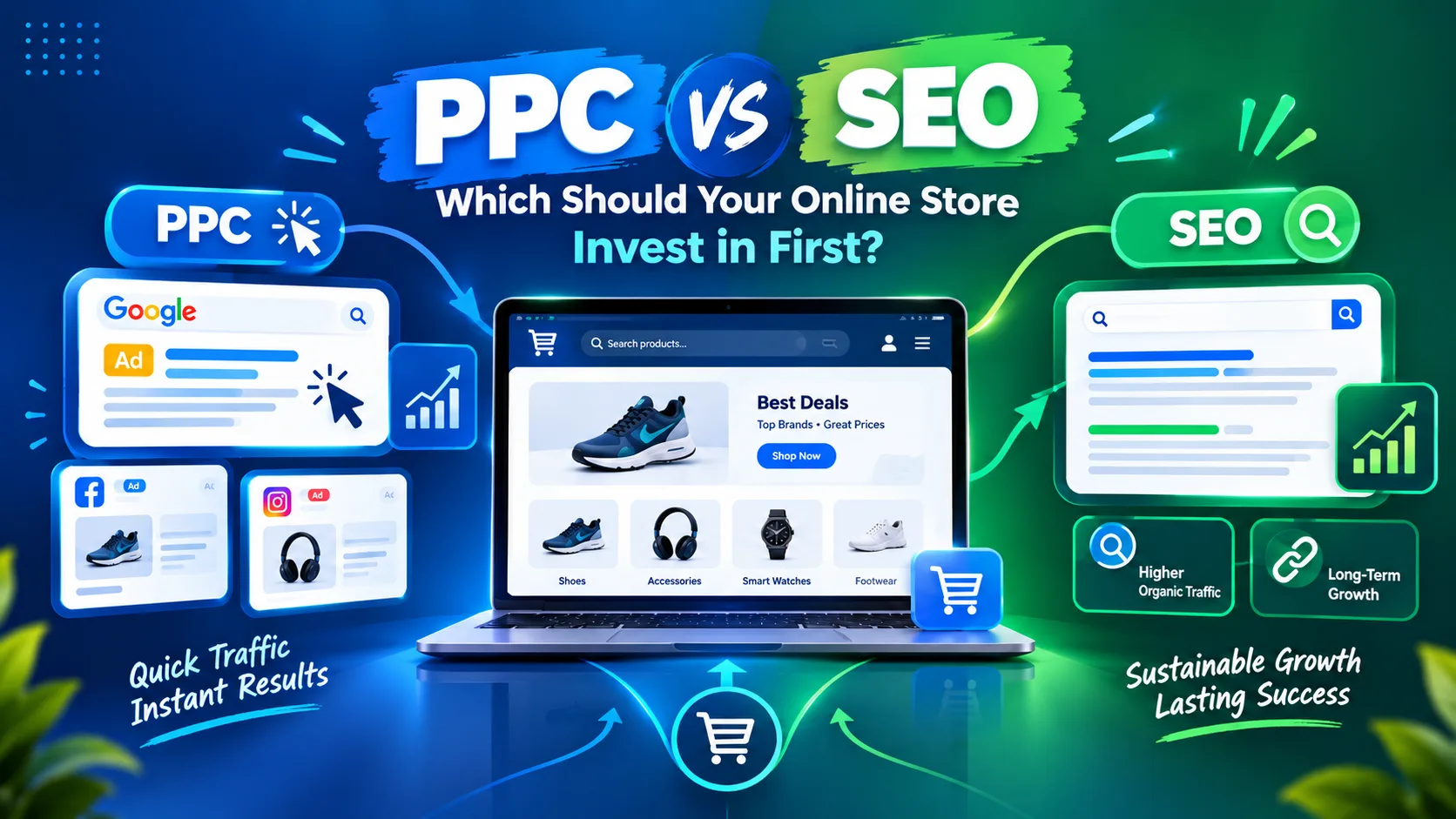
Every online store owner hits this crossroad – should I spend money on PPC advertising or put my time into SEO? Both bring traffic. Both can bring sales. But they work in very different ways, and picking the wrong one first can burn through your budget with nothing to show for it. The short answer is – most eCommerce stores do best when they start with PPC for quick revenue and layer in SEO within the first 90 days for long-term organic growth.
If you run an eCommerce business and want to figure out where your marketing rupees or dollars go first, this guide breaks it all down. No jargon, no fluff – just straight talk backed by over 15 years of building and growing online stores across India, the US, UK, and Australia.
What Is PPC for eCommerce?
PPC (Pay-Per-Click) is paid advertising where you bid on keywords and pay every time someone clicks your ad. Google Ads, Facebook Ads, and Instagram Ads are the most popular channels for running eCommerce PPC campaigns.
The biggest advantage? Speed. You can set up a Google Shopping ad today and start getting clicks within hours. Industry benchmarks put the average eCommerce conversion rate from PPC between 1.5% and 3%, depending on the niche and how well your ads are set up. For new stores that need buyers walking through the door right away, PPC is tough to beat.
But here is the catch – the second you stop paying, the traffic dries up. There is nothing left once the budget runs out. And in crowded niches like fashion, electronics, or health supplements, cost per click can run anywhere from $1 to $5 or higher.
What Is SEO for Online Stores?
SEO (Search Engine Optimization) is the work you do on your website so it shows up higher on Google and Bing when people search for products you sell. This covers everything from product page tweaks and site structure to fixing technical issues, writing useful content, and earning backlinks.
Unlike PPC, organic SEO does not hand you results overnight. It usually takes 3 to 6 months of steady work before real traffic starts flowing in. But once your pages rank well, they pull in free visitors day after day – no click fees, no bidding wars. That is exactly why smart store owners treat digital marketing and SEO as something they build over time, not a one-off expense.
Data from BrightEdge shows that organic search drives over 53% of all website traffic across industries, making it the single biggest traffic source for most online businesses.
SEO vs. PPC: How Are They Different?
Here is how these two channels compare across the things that matter most when you are running a store.
Speed of Results: PPC wins hands down. You can have ads live and pulling traffic within 24 hours. SEO takes 3 to 6 months before you see real movement in your traffic numbers.
Cost Over Time: SEO wins in the long run. The average eCommerce PPC cost keeps climbing year after year – Google Ads CPC went up roughly 10% annually between 2022 and 2025 across most retail categories. SEO builds a base that brings traffic without you paying for every single visitor.
Trust and Credibility: Shoppers trust organic search results more than paid ads. Studies show that around 70% of users scroll right past the ads and click on organic listings. Strong organic rankings tell buyers your store is legit and trustworthy – paid ads just cannot do that the same way.
Conversion Rates: PPC can bring in targeted buyers because you pick exactly where they land. But well-optimised product pages and category pages that rank organically also convert well because the person searching already has buying intent.
Scalability: SEO grows better over time. As your eCommerce store design and content library expand, every new page you add can rank and pull in traffic without costing you an extra paisa per visitor.
When Should You Start with PPC?
PPC is the right first move in a few specific situations:
You just launched your store. When your website is brand new, Google has barely crawled your pages. Paid search ads put you in front of buyers right away while your organic presence slowly builds behind the scenes.
You have a seasonal sale or product launch. Pushing a Diwali deal, Black Friday offer, or a new collection? PPC gives you the instant eyeballs you need within a tight time window.
You are testing a new market. Before going all-in on SEO for a new product line, running PPC campaigns helps you test demand, see which keywords actually bring buyers, and gather real data on what works.
Your competitors own the organic spots. In some categories, the top Google positions belong to giants like Amazon or Flipkart. PPC lets you show up above them while you work on climbing the organic rankings over time.
When Should You Put SEO First?
SEO should be your main focus if any of these situations sound familiar:
You are building for the long haul. If your goal is a business that brings in traffic month after month without depending on an ad budget, organic traffic is the strongest channel you can build.
Your ad costs are eating your margins. In niches where CPC already sits above $3 to $5 per click, SEO gives you another way to reach the same high-intent keywords without the bidding war draining your profits.
You want people to see your brand as a go-to name. Ranking on the first page of Google for your core eCommerce keywords sends a strong signal – both to shoppers and to search platforms – that your store is credible and worth buying from.
Your store sits on a platform built for SEO. Platforms like Magento (Adobe Commerce) and Shopify have solid SEO features baked in. If you already have a well-built multivendor B2B or B2C store, you should be using that foundation to pull in organic traffic.
The Smartest Approach: Combine PPC and SEO Together
Here is what we tell store owners after working on hundreds of projects across different platforms and markets – the smartest play is not picking one over the other. It is PPC and SEO running side by side, phased based on where your business stands.
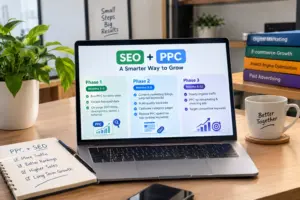
Phase 1 (Months 1-3): Run PPC to get early sales and collect data on which keywords bring buyers. At the same time, start your on-page SEO work – fix title tags, write unique product descriptions, speed up page load times, add structured data markup, and set up the right Magento 2 extensions for better search visibility.
Phase 2 (Months 3-6): Ramp up your content marketing with blog posts targeting long-tail and question-based keywords. Start earning quality backlinks. Optimise your category pages for featured snippets and answer-style search queries. As organic traffic starts growing, cut your PPC spend on keywords where you are already showing up in the top 5.
Phase 3 (Months 6-12): By now, your SEO work should be bringing steady, growing traffic. Move your PPC budget toward remarketing, shopping ads for new products, and those tough competitive keywords that take longer to crack organically. This is where you start seeing real, lasting returns from both channels working together.
This step-by-step approach keeps money coming in from day one. PPC handles the short game while SEO builds the engine that keeps running for years.
Optimize Your Store for Better Visibility Across Search and Answer Engines
Here is something most guides skip – in 2026, your SEO work needs to go beyond just Google page-one rankings. Search platforms now pull direct answers from web content and display them right at the top of results.
To get your store picked up and cited by these search platforms, your content needs specific data points, real names (brand names, platform names, price figures), and direct answers to common buyer questions placed right at the top of your pages. This is what GEO (Generative Engine Optimization) and AEO (Answer Engine Optimization) come down to.
For example, instead of writing something vague like “SEO takes some time to work,” write with specifics – “eCommerce SEO typically takes 3 to 6 months to show real traffic growth, with most stores seeing a 40% to 80% jump in organic sessions within the first year of steady work.”
If your store is built on a fast, well-structured platform with a skilled Hyvä Magento developer behind it, you already have a technical edge that supports both traditional search and answer-engine visibility.
Common Mistakes That Hurt Your Results
A lot of store owners run Google Ads without setting up proper conversion tracking or without making sure their landing pages are fast and clean. If your product pages take forever to load or your checkout is a mess, no amount of paid traffic is going to fix your sales numbers.
On the SEO side, the biggest blunder is ignoring technical SEO. Broken links, duplicate pages, missing schema markup, and a poor mobile experience kill your rankings before your content even gets a fair shot. Before you start spending on blog posts and backlinks, make sure your store’s web development base is tight and clean.
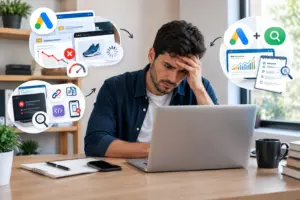
Another mistake people make all the time is running PPC and SEO as two completely separate operations. Your keyword research should feed both channels. The data your PPC campaigns produce – which search terms real shoppers type, which ones turn into purchases – is exactly the kind of information that shapes a winning SEO game plan.
Why Working with an eCommerce Specialist Matters?
Whether you pick PPC, SEO, or both, having people who have done this before on your side makes a real difference in how fast you grow and how much you waste along the way. From building a store that converts to handling ongoing support and maintenance, the right partner cuts months off your learning curve.
At RiseCommerce, we have helped brands across the US, UK, Australia, UAE, and India grow their online revenue through a mix of solid store architecture, hands-on SEO, and smart paid campaigns. Our team of Adobe-certified developers and marketing specialists works with Magento, Shopify, and WooCommerce stores of all sizes. If you want to talk about what would work best for your store, reach out to our team and we will put together a plan that fits your budget and your goals.
Conclusion
The PPC vs SEO debate does not have one right answer for every store. If you need fast results and have the budget for it, start with PPC. If you are building something that should bring in traffic without monthly ad bills, put your energy into SEO early. But for most online stores, the winning play is running both – using paid ads for quick wins while steadily building organic visibility that grows over time. With search platforms now pulling answers from well-structured, data-rich content, your store also needs to be set up for AEO and GEO so it shows up wherever buyers are searching. Start with a clear plan, track what works, and keep adjusting based on what the numbers tell you.
FAQs
1. Is PPC or SEO better for a new eCommerce store?
For a brand-new store, PPC is usually the better starting point because it brings traffic and sales data right away while your SEO work builds up over the first 3 to 6 months.
2. How long does eCommerce SEO take to show results?
Most eCommerce SEO efforts take 3 to 6 months to show real improvements in rankings and traffic. Highly competitive keywords can take 9 to 12 months.
3. Can I run SEO and PPC at the same time?
Yes, and you should. Running PPC and SEO together works better than doing just one. PPC handles short-term traffic while SEO builds your long-term organic presence.
4. Which is cheaper in the long run, PPC or SEO?
SEO costs less over time because organic traffic is free once you rank. PPC needs continuous spend to keep traffic flowing.
5. What PPC platform works best for online stores?
Google Ads – especially Google Shopping campaigns – brings the best results for most eCommerce stores. Facebook and Instagram Ads work well for product discovery and bringing back past visitors.
6. Does SEO help with eCommerce conversions?
Yes. When shoppers find your store through organic search, they usually have stronger buying intent, which often leads to higher conversion rates compared to social media or display ad traffic.
7. How much should an online store spend on PPC per month?
It depends on your niche, but most small to mid-sized eCommerce stores spend between $1,000 and $5,000 per month on PPC. Bigger stores in competitive spaces may go above $10,000.
8. What are the most important SEO factors for eCommerce?
Technical SEO, product page optimization, site speed, mobile-friendliness, structured data, useful content, and quality backlinks are the factors that move the needle most for online stores.
9. Should I stop PPC once my SEO kicks in?
Not entirely. Cut PPC spend on keywords where you already rank in the top 5 organically, but keep running ads for competitive keywords, remarketing campaigns, and new product launches.
10. What is AEO and GEO, and why does it matter for eCommerce?
AEO (Answer Engine Optimization) and GEO (Generative Engine Optimization) are about structuring your content so search platforms pull your answers and cite your store. This means using specific data, named brands, clear pricing, and direct answers to buyer questions right on your pages.